Welcome to Buskett, a lush oasis nestled in the heart of Malta. Embark on a captivating journey through this fascinating woodland where one encounters rich biodiversity inhabiting mosaic of habitats set among cultural landscapes with a long history, intended to provide an easy walk around Buskett. This journey will take approximately around 40 minutes and is 1.44km long. in length. Caution: one needs to be careful when walking as the path is beaten.
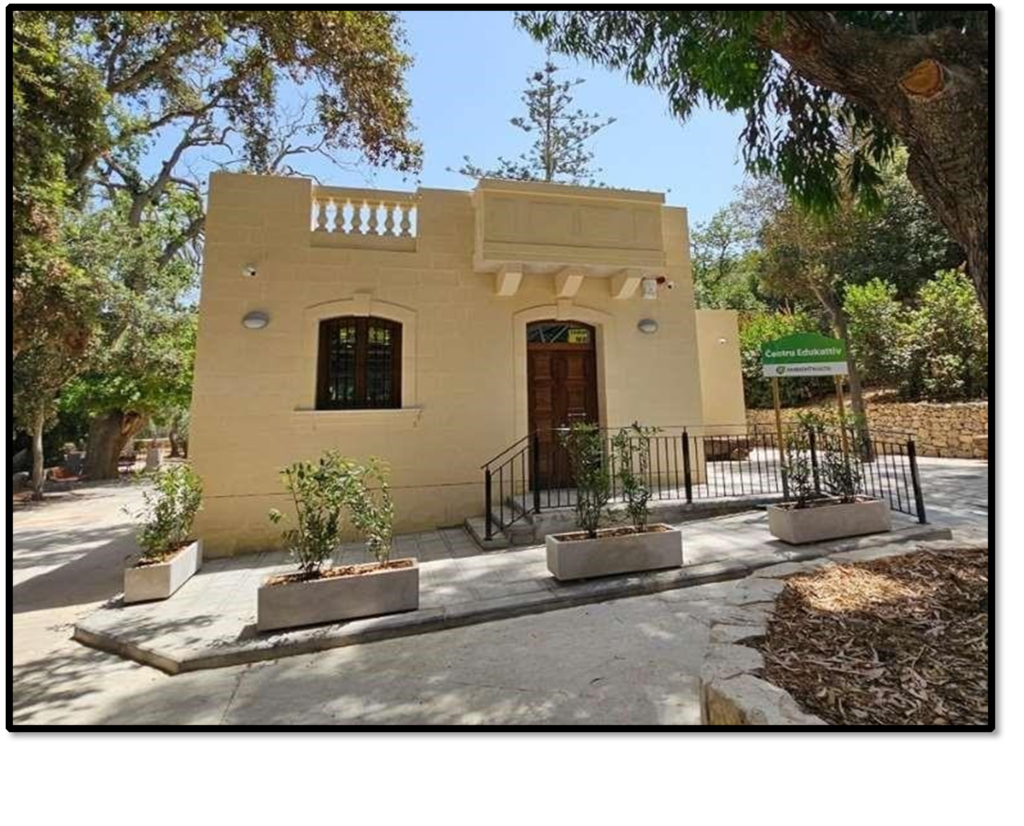
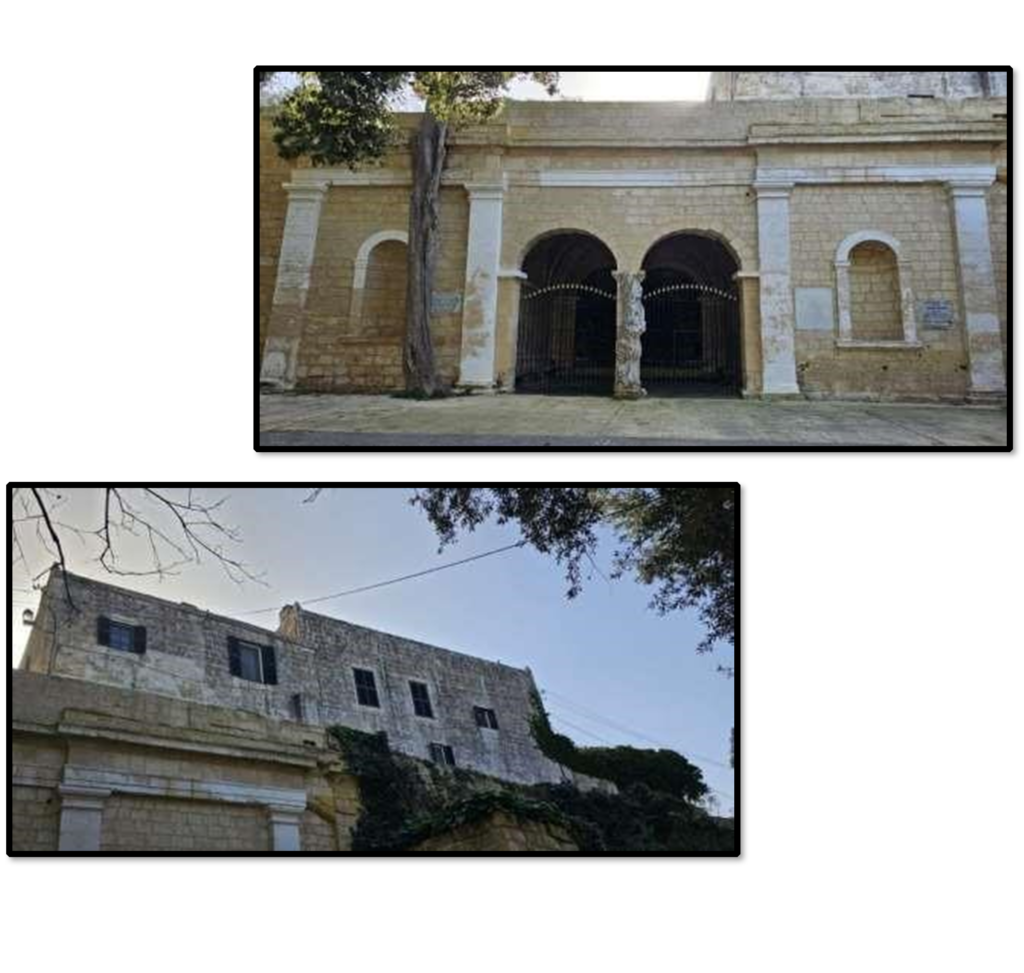
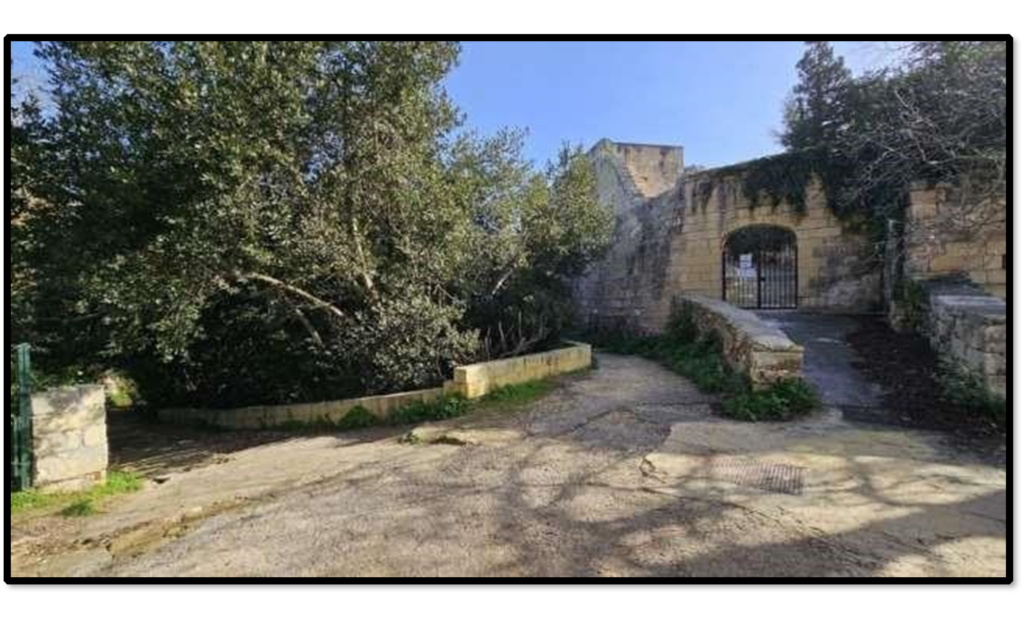
Establishing protected areas and safeguarding biodiversity, particularly native species, are crucial for healthy ecosystems. Former agrarian rooms that had lain abandoned for decades were rehabilitated as an Education Centre, inaugurated in July 2023. The Centre provides information and educational activities regarding environmental-related issues to Buskett visitors alike including seed planting. This Education Centre is administered by Ambjent Malta (AM). As you walk around Buskett, you’ll see fire safety markers. If you spot a fire, call CPD (Civil Protection Department) on 112 and report the nearest marker’s colour and code. This helps responders quickly locate the fire, saving time and preventing small fires from spreading. Since its inception in 2018, AM implemented numerous environmental projects including installation of green walls in urban areas, removal of invasive non-indigenous plants, planting over 60,000 indigenous trees all over the islands, landscaping projects and management of protected areas, including here Buskett. As you entered Buskett, on your left-hand side, is the alcove with natural watercourse which is fed by the “Ta’ Sala” forking into it. A large stalactite stands outside the Grotto: it is said to have been brought over from the nearby “Għar il-Kbir” cave complex. A large hunting lodge commissioned by Grandmaster Jean Parisot de Valette is situated above the Grotto.
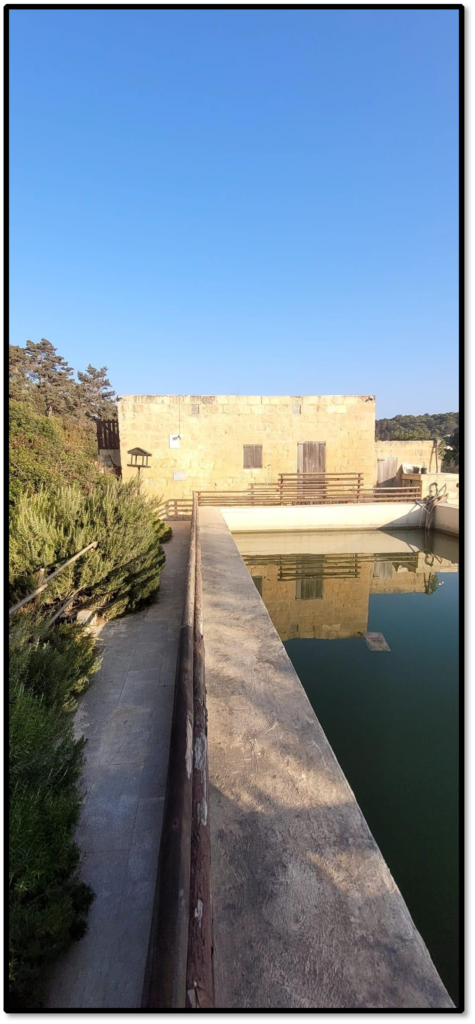
Walk till you reach the pond that is situated behind the Buskett Education Centre.
Here one can observe several aquatic invertebrates:
This artificial pond has become a refuge for infrequent, threatened, indigenous vascular plant species and fauna have been introduced to this newly created freshwater habitat:
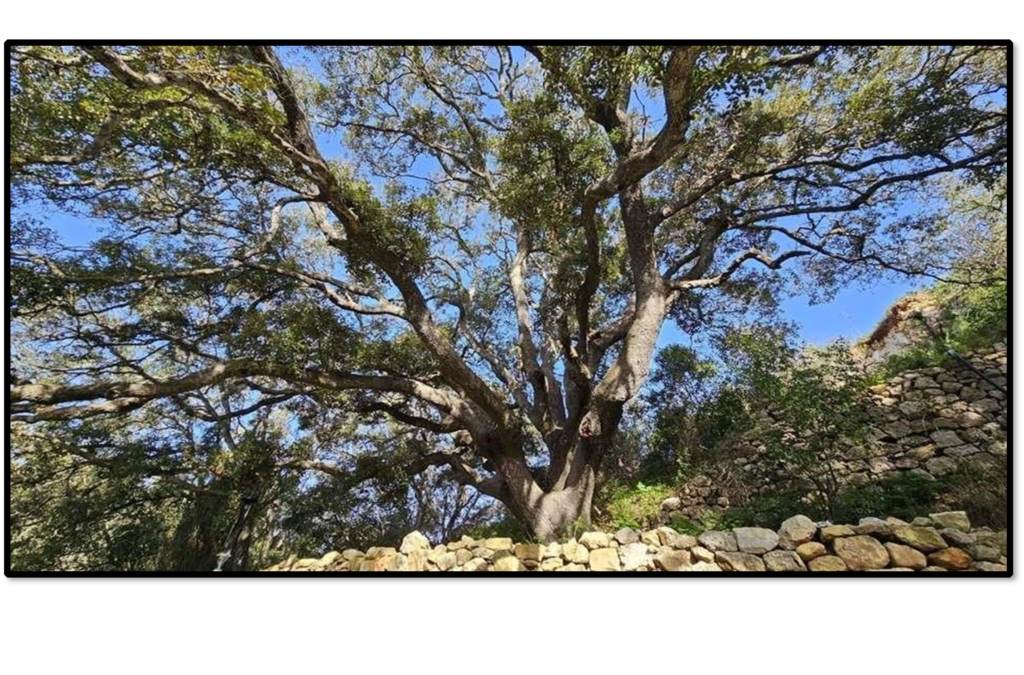
Walking down the path, coming to a crossroads, turn onto the gentle uphill footpath on your right-hand side, to find one of the only four remaining relictual patches of native wild Holm Oak woodland.
Once you find yourself among the centuries-old Holm Oak (“Balluta/Siġra tal-Ġandar”) trees, take your time for some forest bathing: look up; reflect and observe the sunlight playing through the leaves, the wind rustling the leave on the trees and inhale the fresh redolent forest air.
Back to the cross-roads and walk a few meters downhill.
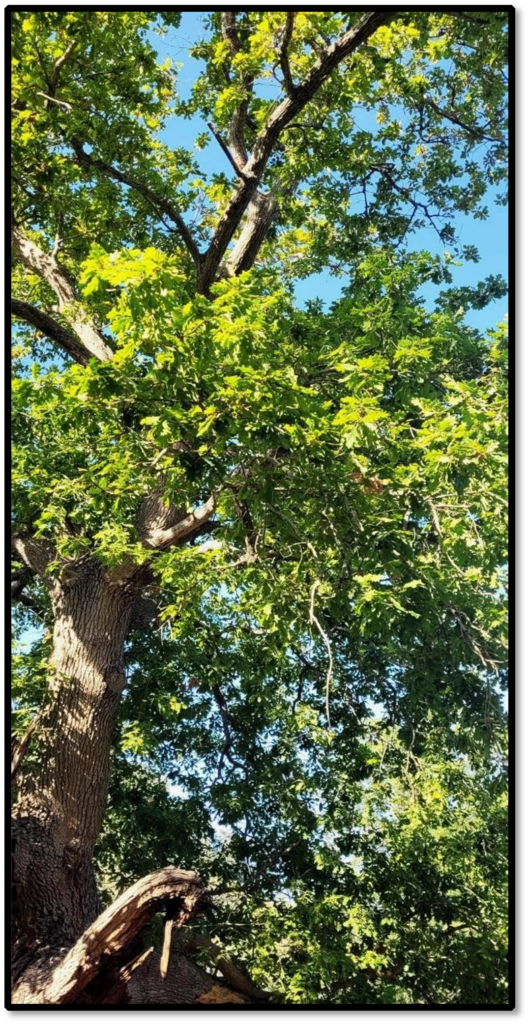
At this spot, on your left-hand side, you will find yourself in the shade of a very large Pedunculate Oak Tree (“Balluta Inġliża”).
Note that the leaves of the Pedunculate Oak are very different from those of the Holm Oak:
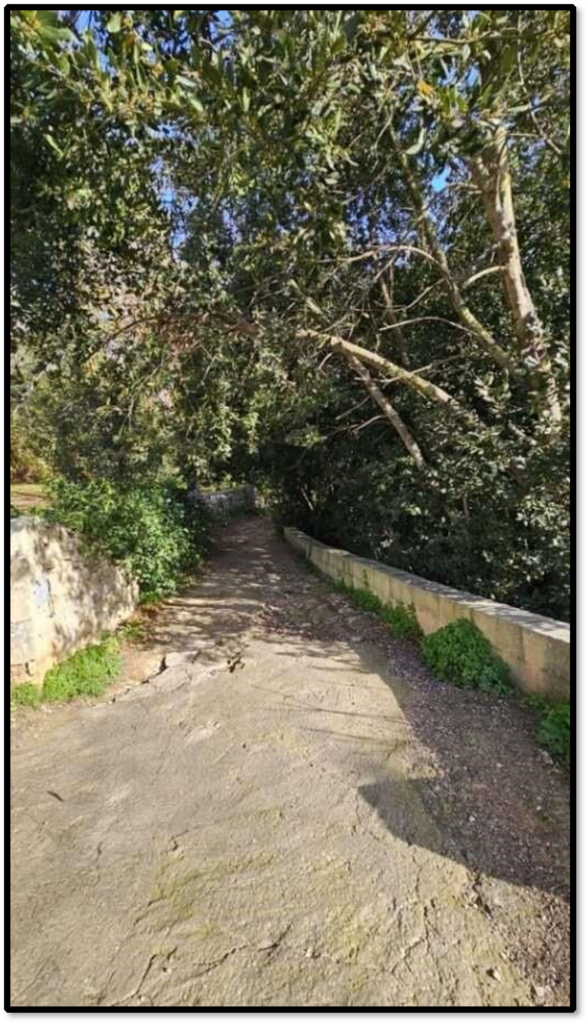
Walk a few metres down the country road and turn to your right. You are now walking alongside the Buskett (“Wied il-Buskett”).
Buskett is Malta’s largest forested area, mainly consisting of trees planted during the rule of the Knights of St. John and the British Empire, but a few relictual patches of natural (wild) native woodland within its confines remain.
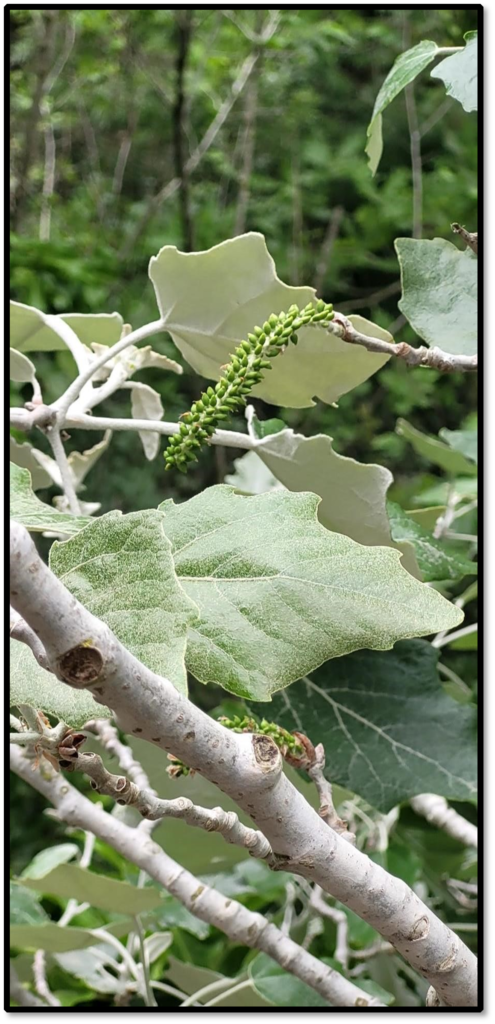
The largest remaining population of the rare indigenous White Poplar (“Luq”) is to be found within “Wied il-Buskett” (Buskett Valley), cutting through Buskett, and the contiguous Girgenti – “Għajn il-Kbira” valley.
The White Poplar is the dominant tree of riparian woodlands in the Maltese Islands, forming extensive galleries. It is characterised by lobed leaves that are green on the upper surface and velvety white beneath, giving the tree a sparkling silvery aspect as it is swayed by the breeze. Note that nearly all White Poplar in Buskett are males, with only one female tree being extant.
As you walk down the valley, on your right, you can observe the “Tal-Bagħal” Farmhouse.
The largest of the four farmhouses at Buskett, the “Razzett tal-Bagħal”, which have been restored, was commissioned by Grandmaster Giovanni Paolo Lascaris and built between 1636 and 1657. As per the 1867 blueprints, it comprised of three courtyards, a storage area, three stables, and an additional room on the first floor. The building bears the coats-of-arms of both Grandmaster Lascaris, on its exterior, and that of Grandmaster Wignacourt, on the internal face of the archway which leads to the farmhouse, while a third coat of arms of Grandmaster de Rohan, is found on the upper storey of the farmhouse façade.
Primarily used for animal husbandry, its rooms served multiple purposes, functioning as storage for crops, tools, firearms, and birdwatching equipment while offering protection from the elements. Today, it is managed by the Federation for Hunting and Conservation (FKNK). Currently, a project is underway with the primary goal of reintroducing barn owls into their natural habitat in Malta, aiming to establish a sustainable population. The last recorded breeding pair in the wild dates back to the early 1980s.
At this point, with “Razzett tal-Bagħal” situated on the right, you may proceed down a gentle slope into a deeper and very well-shaded part of the valley, through which a seasonal stream, which is rich in biodiversity, courses.
This very well-shaded part of the valley, through which an intermittent stream courses through is rich in biodiversity:
Turning back to the crossroads: at the point where the “Razzett tal-Bagħal” farmhouse stands to the right, proceed to a narrow pathway.
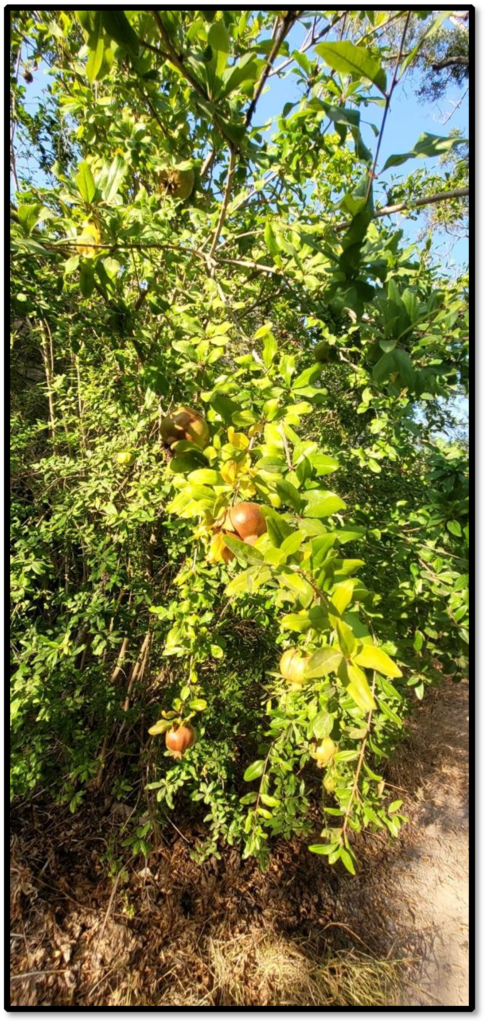
Pomegranate trees (“Rummiena”) are protected under Schedule II of the Environment Protection Act (CAP.348) Trees and Woodlands (Protection) Regulations, 2001. The tree is relatively small, typically growing to a height of 5 to 10 metres, but of high ornamental value by virtue of its foliage, consisting of leaves that are glossy, narrow, and typically dark green, often reddish when they first emerge, and its flowers, which are a bright orange-red, funnel-shaped.
The fruit is round, with a tough, leathery skin that ranges in color from yellow green to coppery red or rose pink. Inside, it contains numerous seeds encased by pulpy, sweet-tart arils (the edible part). Each fruit may contain hundreds of these seeds.
Walk a few meters until you find a stone stairway on your right leading to a reservoir (Please, do not climb) and the white female poplar tree on your left.
On your left you can observe, one of the few left, if not the only female White Poplar tree (“Siġra tal-Luq”) here at Buskett. Female poplar trees contribute to the genetic diversity of the species by producing seeds. While, male trees produce pollen, female trees produce seeds that can be dispersed by wind, ensuring the continuation and spread of the species. In ecosystems where poplars are present, this seed production is vital for sustaining plant populations and supporting various wildlife species that depend on the trees for food and habitat.
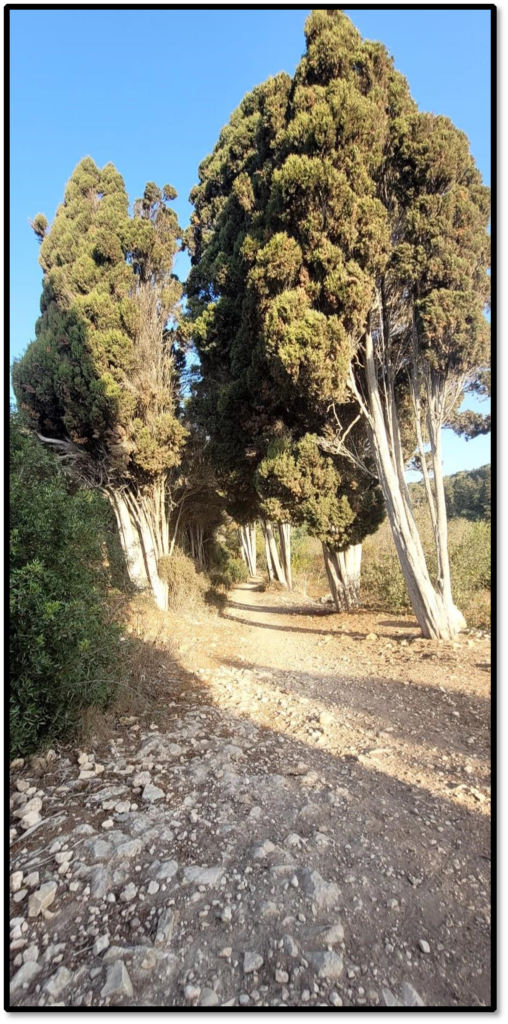
Keep on walking straight until you find yourself in a passage flanked with Cypress trees.
In Malta the Cypress tree (“Ċipress kannella”) is a commonly planted tree, in both urban and rural settings. It is likely to have been introduced to Malta within the last 500 years. Despite being a relatively recent introduction, it has adapted well to its surroundings, it being resistant to the strong dry winds which commonly prevail. It does occasionally naturalize, which is to be expected, given its Mediterranean origins.
These trees can grow to impressive heights, standing out, a landscape dominated by native low-growing species. Two sub-species exist: one with a sombre-looking, columnar shape and another with a more irregular form. A common misconception is that the neat columnar appearance results from pruning. Each tree bears both male and female cones. Once mature, the female cones are ball-shaped, the woody scales parting to release the seeds.
At one point turn 180 degrees and you can see the Verdala Palace. Keep walking straight until there is a turning point and turn to your right.
This farmhouse was commissioned by the Grandmaster Giovanni Paolo Lascaris and built between 1636 and 1657. It is the smallest structure and was made up of one storeroom, one small kitchen and one underlying stable. It was used as a store for alcohol and fertilisers. Nowadays the building is used by Ambjent Malta as an office as well as well as a store for tools and materials used for maintenance.
Keep walking straight until you reach again the Buskett Education Centre. This is the end of the trip; hope you enjoyed walking through the wonders of nature and experiencing the tapestry of sounds and scents. Thank You.